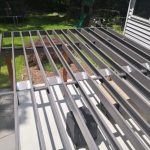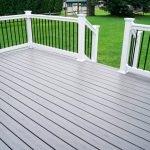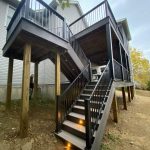
Your deck’s beauty depends on what nobody sees. While homeowners obsess over decking boards and railing styles, the real battle for longevity happens in the frame hidden beneath. This foundation determines whether your deck lasts a decade or half a century.
The choice between steel deck framing and pressure-treated wood isn’t just about materials. It’s about choosing between two fundamentally different approaches to durability. One material deteriorates predictably over time. The other maintains its integrity for generations. Understanding these differences prevents costly mistakes and ensures your outdoor investment delivers maximum value.
The Rot Problem: Why Modern Pressure-Treated Wood Fails Faster
Pressure-treated wood was once the gold standard for deck framing, but the story has changed dramatically. Before 2003, Chromated Copper Arsenate (CCA) treatment delivered 30-40 years of protection. Environmental concerns eliminated CCA from residential use, replacing it with Alkaline Copper Quaternary (ACQ) and Copper Azole (CA) formulations.
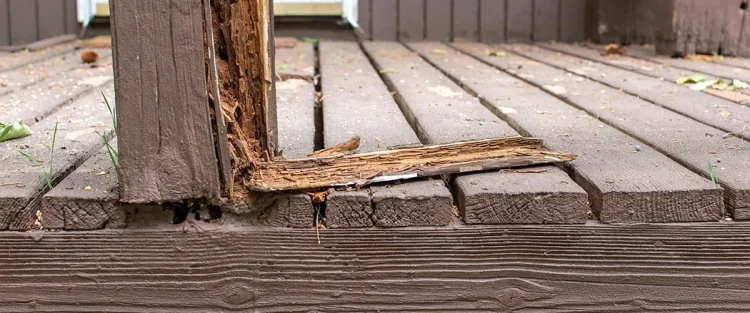
The new treatments work, but not as well. Deck builders and homeowners consistently report rot appearing in modern pressure-treated framing after just 10-15 years. This represents a dramatic decline from the previous generation of treated lumber.
What’s causing the accelerated failure? Several factors work together to undermine pressure-treated wood durability:
Moisture Trapping
Deck boards sit directly on horizontal joist surfaces, creating perfect conditions for moisture accumulation. Water seeping between boards contacts the joist, and with nowhere to escape, it sits there. Day after day, month after month, that trapped moisture provides exactly what wood-eating fungi need to thrive.
Even with joist tape applied to the top surface, moisture finds entry points through fastener holes. Once inside the wood, the damage begins. Joist tape helps, but it’s another cost and installation step attempting to protect an inherently vulnerable material.
Chemical Treatment Limitations
Modern pressure treatment chemicals work on the wood’s surface level. When you cut treated lumber, you expose untreated interior wood. Every cut end represents a vulnerability point where moisture and fungi can attack.
The treatment itself has limitations. ACQ and CA provide chemical barriers against decay, but time and exposure degrade these protections. The chemicals don’t eliminate the organic nature of wood—they just slow the inevitable biological breakdown.
Fastener Corrosion
The copper compounds in modern pressure-treated wood corrode standard fasteners aggressively. Galvanized nails and screws deteriorate quickly when in contact with treated lumber. This forces the use of stainless steel or specially-rated hardware, adding cost.
But here’s the deeper problem: as fasteners corrode, they create expanding holes. Water enters these openings and accelerates rot from the inside out. By the time you notice structural issues, significant internal damage has already occurred.
Ground Contact Concerns
Posts and beams in contact with or near soil face extreme rot pressure. Even pressure-treated lumber rated for ground contact (0.40 PCF or higher) eventually succumbs. Moisture wicks up from earth, fungal spores are abundant near ground level, and the constant wet-dry cycling breaks down wood fiber.
Many deck failures start at ground-level posts. By the time the rot becomes obvious, the structural damage extends well into the frame.
Steel’s Durability Advantage: Why It Outlasts Wood
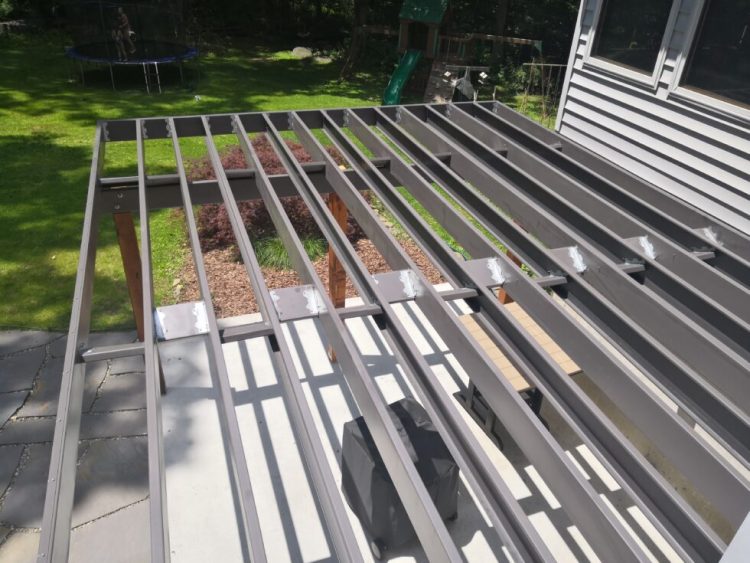
Steel deck framing sidesteps every vulnerability that compromises wood. The material’s inherent properties eliminate the factors causing deck frame failure.
Complete Rot Immunity
Steel doesn’t rot. Period. Fungi require organic material to consume. Steel is inorganic metal—there’s nothing for fungi to eat. This simple fact eliminates the single biggest threat to deck frame longevity.
Moisture can sit on steel indefinitely without causing rot. Rain, humidity, ground contact—none of it matters. Steel won’t decay, split, or lose structural integrity from water exposure.
Modern steel deck framing comes with galvanized coatings or powder-coated finishes that provide additional corrosion protection. Even in coastal environments or high-humidity regions, properly finished steel maintains its integrity for decades.
Dimensional Stability
Wood moves. It expands when wet, contracts when dry, warps with temperature changes, and twists as it ages. This dimensional instability creates multiple problems. Boards loosen as joists twist, fasteners work themselves out, and surfaces become uneven.
Steel maintains perfect dimensional stability. The joists you install today will be exactly as straight and flat 30 years from now. No warping, no twisting, no shrinking. This stability provides several advantages:
- Decking boards remain level and secure
- Fasteners stay tight
- No need for joist planing or straightening during installation
- Ideal substrate for rigid materials like tile or stone
- Perfect surface for deck refinishing decades later
Temperature fluctuations and humidity changes that wreak havoc on wood leave steel completely unaffected. From winter freezes to summer heat, steel maintains its engineered dimensions.
Zero Pest Vulnerability
Termites, carpenter ants, and carpenter bees destroy wood deck frames. These insects can start damaging pressure-treated lumber immediately after installation, despite the chemical treatment. Carpenter bees, in particular, drill large holes in treated wood within the first year, creating entry points for moisture and secondary decay.
A single termite colony can contain hundreds of thousands of insects, all eating away at your deck structure. Carpenter ant colonies reach 50,000 members, hollowing out joists to create nests. The damage accumulates invisibly until structural failure occurs.
Steel is completely immune to insect damage. Termites can’t eat metal. Carpenter bees can’t drill through it. Carpenter ants can’t hollow it out. This immunity eliminates thousands of dollars in potential exterminator bills and structural repairs over your deck’s life.
Real-World Lifespan: The Numbers Don’t Lie
Understanding durability requires looking at actual lifespan data.
Pressure-Treated Wood Framing Lifespan
Current pressure-treated lumber lasts 10-20 years on average. Some frames reach 25 years with exceptional maintenance and favorable conditions. Many fail sooner in humid climates, high-rainfall areas, or situations with poor drainage.
The failure timeline typically follows this pattern:
- Years 1-5: Frame looks fine, minimal visible issues
- Years 6-10: Early signs of decay appear—soft spots, discoloration, minor insect damage
- Years 11-15: Significant rot becomes evident, structural concerns develop
- Years 16-20: Frame failure imminent or already occurring, replacement necessary
This timeline assumes reasonable maintenance. Neglected frames fail faster. Geographic location matters enormously—humid southern climates accelerate decay compared to dry western regions.
The critical problem: modern composite and PVC decking boards last 25-50 years. Your decking surface will outlive your wood frame by a decade or more. This mismatch means paying for complete deck replacement when only the hidden structure has failed.
Steel Framing Lifespan
Steel deck framing lasts 25-50+ years with virtually zero maintenance. Properly installed galvanized or powder-coated steel can outlast your home.
Manufacturers back this durability with 15-25 year structural warranties—substantially longer than any pressure-treated lumber warranty. The warranties reflect real-world performance, not marketing claims.
Steel frames don’t gradually deteriorate like wood. They maintain full structural integrity decade after decade. The frame installed in 2026 will be indistinguishable from new in 2056. No soft spots, no rot, no compromised structure.
This exceptional lifespan creates a significant advantage: when decking boards eventually need replacement (they all do eventually), the steel frame remains perfectly serviceable. Remove old boards, install new ones, and you’re done. No structural replacement required.
With wood framing, board replacement often reveals frame rot requiring complete reconstruction. What should be a $5,000 resurfacing job becomes a $15,000 full replacement.
Maintenance Requirements: Time and Money Over Decades
Durability isn’t just about lifespan—it’s about what that lifespan costs in ongoing maintenance.
Pressure-Treated Wood Maintenance Demands
Wood framing requires regular attention to maximize its limited lifespan:
Annual Inspections
Walk underneath your deck at least once yearly, looking for early signs of rot, insect damage, or structural issues. Check for soft spots by poking joists with a screwdriver or ice pick. Examine connections and hardware for corrosion. Inspect posts for ground-level decay.
This inspection takes several hours and requires some expertise to identify problems before they become critical. Miss the inspection or overlook early warnings, and small issues become major failures.
Pest Control
Carpenter bees appear within the first year, drilling large holes in pressure-treated joists. Professional extermination costs $200-500 per treatment. Many homeowners need multiple treatments over the deck’s life.
Termite infestations require aggressive professional intervention. Treatment costs vary widely based on infestation severity, but $500-2,000 is common. Left untreated, termites cause thousands in structural damage.
Carpenter ants create colonies of 50,000+ insects inside your frame. Extermination costs similar to termite treatment, with additional expense for repairing hollowed-out joists.
Hardware Replacement
The copper in pressure-treated wood corrodes standard fasteners within a few years. Corroding hardware weakens connections and accelerates rot through enlarged holes. Replacing compromised fasteners and reinforcing connections adds hundreds to thousands in maintenance costs.
Protective Measures
Applying joist tape to all horizontal surfaces before installing decking adds $100-300 depending on deck size. While helpful, it’s an additional cost attempting to protect vulnerable wood.
Sealing cut ends with preservative adds material cost and labor time. Missing this step accelerates decay at every cut location.
Repairs and Reinforcement
As rot develops, repairs become necessary. Sistering new joists alongside damaged ones, replacing rotted sections, reinforcing weakened connections—these repairs accumulate over the frame’s life. Costs range from a few hundred dollars for minor fixes to thousands for extensive structural work.
The worst part: you can’t see most frame problems until they’re serious. Rot develops hidden beneath decking boards. By the time sagging or soft spots become obvious, significant damage has occurred.
Steel Frame Maintenance
Steel framing maintenance requirements: essentially nothing.
No annual inspections needed beyond basic structural checks you’d do with any deck. No pest control—insects can’t damage steel. No protective treatments. No hardware corrosion issues. No rot repairs.
Powder-coated or galvanized steel resists corrosion in virtually all climates. Even coastal environments see minimal degradation. The finish applied at the factory lasts decades without attention.
This maintenance-free characteristic delivers two major benefits. First, you save thousands in ongoing costs over 20-30 years. Second, you eliminate the time and hassle of regular deck frame maintenance.
Structural Performance: How They Handle Real-World Demands
Durability includes maintaining structural integrity under actual use.
Dimensional Consistency
Wood moves constantly. Moisture content changes with weather, causing expansion and contraction. Temperature swings create warping. Drying over time produces twisting and cupping.
These dimensional changes create problems during installation and throughout the deck’s life. Contractors spend hours selecting the straightest joists, crowning (identifying the natural curve) each piece, and sometimes planing surfaces flat. Even with careful installation, joists continue moving after the deck is built.
The result: uneven surfaces that telegraph through decking boards, creating lippage and requiring shims or adjustments. Fasteners loosen as wood moves. Composite boards designed to lay perfectly flat reveal every imperfection in the frame beneath.
Steel arrives perfectly flat and straight. Every joist has identical dimensions—no sorting, no crowning, no planing needed. Install the frame and it’s immediately ready for decking. More importantly, it stays that way forever.
This consistency matters tremendously when installing premium composite or PVC decking. These materials are engineered to extremely tight tolerances. They require a perfectly flat substrate to perform properly. Steel delivers that. Wood struggles.
Load-Bearing Capacity
Steel’s strength-to-weight ratio far exceeds wood. Steel framing can support 50-200 pounds per square foot depending on gauge and spacing, compared to wood’s 40-50 PSF capacity.
This extra capacity matters for several applications:
- Hot tubs (requiring 100+ PSF support)
- Outdoor kitchens with heavy appliances and stone countertops
- Large gatherings with many people and furniture
- Snow load in northern climates
- Future additions you might not plan for now
Steel provides a safety margin wood can’t match. Even if you don’t need maximum capacity today, having it available provides flexibility and peace of mind.
Spanning Capability
Steel joists span significantly farther than wood without intermediate support. Spans up to 16 feet are possible with steel, compared to 8-12 feet for comparable wood joists.
Greater spans mean fewer support posts and beams. This reduces material costs, simplifies foundation work, and creates more open space beneath elevated decks. Fewer visual obstructions provide better views and cleaner aesthetics.
For second-story decks, this difference is dramatic. Steel framing creates open sightlines where wood requires multiple support posts blocking views.
Fire Resistance
Wood carries a Class C fire rating—moderate fire resistance but still combustible. In wildfire-prone areas, wood framing can be a liability or even violate building codes.
Steel is non-combustible with a Class A fire rating—the highest available. In Wildland-Urban Interface (WUI) zones where wildfire risk is significant, steel may be the only legal option for deck construction.
This fire resistance protects your home and potentially qualifies you for insurance discounts in high-risk areas. It’s a safety advantage wood simply cannot provide.
Climate Impact: How Weather Affects Each Material
Geographic location dramatically affects deck frame durability.
Humid and High-Rainfall Climates
Pressure-treated wood struggles in humid regions. Consistent moisture keeps wood wet, creating ideal conditions for fungal growth. The southeastern United States, Pacific Northwest, and other high-humidity areas see accelerated wood decay.
Rain provides the moisture fungi need. Poor drainage around deck areas compounds the problem. Ground-level decks in humid climates face extreme rot pressure from both above and below.
Steel thrives in these environments. Humidity doesn’t matter—steel won’t rot regardless of moisture levels. Rain runs off without impact. Modern coatings protect against corrosion even in persistently wet conditions.
Coastal Environments
Salt air corrodes metal, making coastal areas potentially challenging for steel. However, modern galvanized and powder-coated steel deck framing resists corrosion effectively even in marine environments. The protective coatings are specifically engineered for harsh conditions.
Coastal pressure-treated wood faces salt, humidity, and moisture simultaneously. This triple threat accelerates decay significantly. Wood decks near the ocean often fail in 8-12 years rather than 15-20.
Freeze-Thaw Cycles
Northern climates with repeated freezing and thawing stress deck structures. Water enters wood, freezes and expands, then thaws and contracts. This cycle splits and cracks pressure-treated lumber, creating more entry points for moisture and decay.
Steel handles freeze-thaw cycles without issue. The material doesn’t absorb water, so expansion forces don’t apply. Temperature extremes from -20°F to 120°F leave steel completely unaffected.
Dry Climates
Arid regions offer the most favorable conditions for pressure-treated wood. Limited moisture means slower rot development. Wood frames in desert environments can reach the upper end of their lifespan—potentially 20-25 years.
Even in dry climates, though, wood remains vulnerable to insect damage. Termites thrive in many arid regions despite low humidity. One severe storm with poor drainage can introduce enough moisture to start decay.
Steel’s advantages diminish slightly in dry climates where wood performs best, but the material still delivers superior longevity and zero maintenance regardless of location.
The Hidden Cost: Structural Failure and Safety Concerns
Deteriorating deck frames aren’t just expensive—they’re dangerous.
Progressive Weakness
Rot doesn’t affect the entire frame uniformly. It starts in vulnerable areas—tops of joists, posts near the ground, areas with poor drainage. As rot advances, these sections weaken while surrounding structure remains solid.
This uneven deterioration creates dangerous situations. A section that looks fine from above may have critical structural damage beneath. Walking on a compromised deck risks sudden failure, potentially causing serious injuries.
Annual inspections help identify problems early, but homeowners often skip them or lack the expertise to recognize issues. Rot can advance significantly between checks.
Catastrophic Failure Risk
Severely rotted frames can fail suddenly and completely. A deck supporting a family gathering can collapse without warning if structural members have deteriorated beyond safe limits. These failures cause injuries and sometimes deaths every year.
The risk is highest with older decks where owners assume “it’s always been fine.” Accumulated rot reaches a critical threshold, and the structure gives way under normal use.
Steel frames don’t gradually weaken. The material maintains full structural integrity throughout its service life. Sudden catastrophic failure simply doesn’t happen with properly installed steel framing. This safety advantage provides genuine peace of mind, especially for elevated decks.
Insurance and Liability
Homeowners are liable for injuries occurring on their property. A deck collapse caused by structural failure you should have addressed creates serious legal and financial exposure.
Insurance may not cover damages if inspections reveal neglected maintenance. Proving you conducted regular frame inspections and maintenance becomes critical to insurance claims and liability defense.
Steel framing essentially eliminates these concerns. The material’s inherent durability means structural failure from deterioration doesn’t occur. Your liability risk drops to properly following building codes during installation rather than managing ongoing decay.
Installation Considerations: Working with Each Material
Durability starts with proper installation.
Pressure-Treated Wood Installation
Wood framing is familiar to virtually every deck contractor. Standard carpentry tools handle the work—circular saws, drills, levels, and basic fasteners. Most builders have decades of experience with wood, making installation straightforward.
However, installation quality varies significantly. Cutting corners on flashing, skipping joist tape, using wrong fasteners, or neglecting proper drainage setup all shorten frame life. Finding a contractor who follows best practices makes a major difference.
Wood installation also faces the “lumber quality lottery.” Even with careful selection, some boards will be warped, twisted, or split. Contractors spend time sorting through material, and sometimes bad pieces make it into the frame anyway. This inconsistency affects both installation time and long-term performance.
Steel Frame Installation
Steel framing requires different techniques but isn’t fundamentally more difficult. If you can frame with wood, you can frame with steel. The learning curve is minimal—most contractors master it within their first project.
Key differences include:
- Metal-cutting blade instead of standard saw blade
- Self-tapping screws eliminating pre-drilling
- Lighter material that’s easier to handle
- Every component arrives perfectly straight—no sorting needed
Many contractors initially hesitate due to unfamiliarity, but those who try steel framing typically prefer it. The components go together faster than wood once you understand the system. Perfect straightness eliminates time spent planing and adjusting joists.
Manufacturers provide detailed installation guides, videos, and technical support. First-time steel installers report the process is actually easier than wood once the initial learning phase passes.
The main installation challenge is contractor reluctance. Some builders resist unfamiliar methods regardless of advantages. Finding a contractor willing to work with steel or experienced with these systems is essential.
Making the Right Choice for Your Deck
The durability showdown has a clear winner for long-term performance, but the right choice depends on your specific situation.
Choose Pressure-Treated Wood If:
- Budget is extremely tight and you cannot accommodate steel’s higher initial cost
- You’re building a simple, small deck where replacement is relatively inexpensive
- You’re in an arid climate where wood performs best
- You plan to sell the home within 10 years
- You have easy access to contractors experienced with wood
- You’re comfortable with regular inspections and maintenance
- The deck is a temporary structure you’ll eventually replace anyway
Choose Steel Deck Framing If:
- You’re building a deck you want to last 25+ years
- You’re installing premium composite or PVC decking designed for long lifespans
- You want zero-maintenance structure
- You live in a humid, high-rainfall, or coastal environment
- You’re in a region with significant termite or carpenter bee pressure
- You need maximum structural strength for hot tubs or heavy features
- You want superior spanning capability with fewer support posts
- You’re in a wildfire zone requiring Class A fire rating
- You value perfect dimensional stability for high-end finishes
- Long-term value matters more than initial cost
For most homeowners building a serious outdoor living investment, steel framing makes sense. The combination of exceptional longevity, zero maintenance, superior structural performance, and elimination of pest concerns justifies the initial premium.
The durability difference is substantial enough that steel often costs less over the deck’s lifetime. When you factor in wood’s maintenance expenses, eventual replacement, and hassle of managing deterioration, steel’s higher upfront cost delivers better overall value.
However, if you’re truly budget-constrained or building a small, temporary structure, pressure-treated wood remains a viable option. Just understand you’re accepting shorter lifespan and ongoing maintenance in exchange for lower initial investment.
The Verdict: Long-Term Durability Demands Steel
When durability is the primary concern—and it should be for any significant deck investment—steel deck framing wins decisively. The material outlasts pressure-treated wood by decades while eliminating every major failure mode that compromises wood frames.
Rot immunity, dimensional stability, pest resistance, and structural consistency aren’t minor advantages. They’re fundamental differences that determine whether your deck lasts 15 years or 50 years, requires constant attention or none, and provides reliable safety or increasing risk.
Modern pressure-treated wood performs far worse than its CCA predecessor. The 10-15 year typical lifespan means most homeowners will replace their deck frame at least once, possibly twice, over their home ownership period. Those multiple reconstructions cost significantly more than the initial premium for steel.
Steel’s durability advantage grows more compelling as deck materials advance. Premium composite and PVC decking now outlasts the frames supporting them when wood is used. This mismatch forces expensive complete replacements when only the hidden structure has failed. Steel solves this problem, matching the longevity of the best decking materials.
The choice between steel and pressure-treated wood ultimately comes down to values: minimum initial cost versus maximum long-term value. For homeowners who view their deck as a lasting outdoor living investment rather than temporary addition, steel framing is the clear answer.
Your deck deserves a foundation that matches your investment in beautiful decking boards and design. That foundation is steel.
Ready to build a deck that truly stands the test of time? At Against The Grain Construction, we specialize in creating durable outdoor living spaces built with quality craftsmanship and premium materials. Explore our expert deck construction services to discover how we bring lasting value to every project, or call us directly at (513) 305-9982 to discuss your vision and receive a free estimate. Whether you choose traditional wood or modern steel framing, we’ll ensure your deck is engineered for maximum durability and decades of enjoyment.